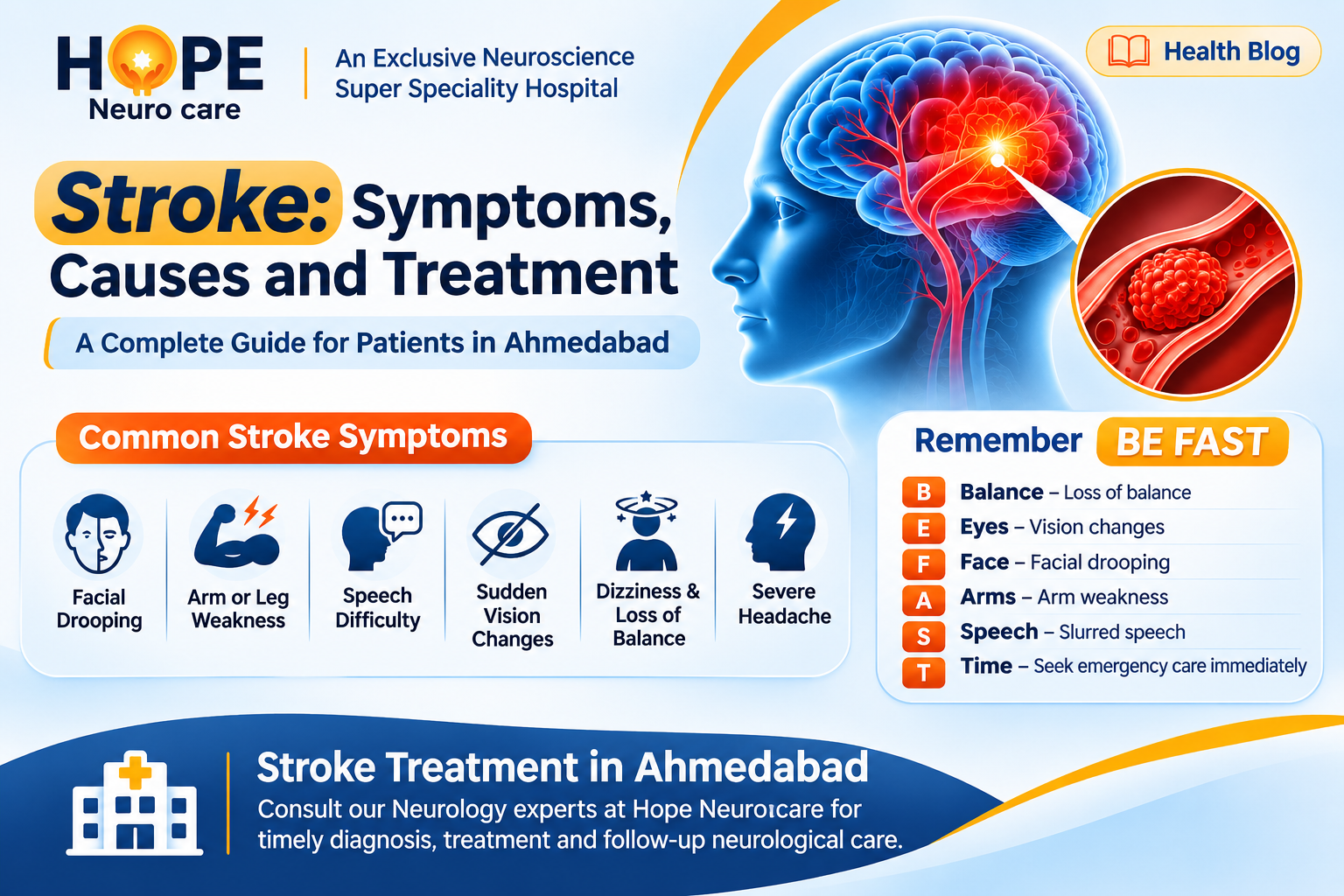
A stroke is a serious medical condition that occurs when the blood supply to part of the brain is interrupted or when a blood vessel in the brain ruptures. It is a medical emergency that requires immediate attention. Recognizing warning signs early can help reduce the risk of serious complications.
If you are searching for Stroke Treatment in Ahmedabad, understanding the symptoms, causes, diagnosis and treatment options is an important first step.
At Hope Neurocare, Ahmedabad, patients can learn about neurological care, stroke diagnosis and follow-up services with guidance from healthcare professionals.
A stroke occurs when blood flow to part of the brain is blocked or when bleeding occurs inside or around the brain. Brain cells need a continuous supply of oxygen and nutrients to function properly.
When this supply is interrupted, brain cells can become damaged. Therefore, immediate medical evaluation is essential.
An ischemic stroke occurs when a blood clot or blockage prevents blood from reaching part of the brain. It is the most common type of stroke.
A hemorrhagic stroke occurs when a blood vessel in the brain ruptures and causes bleeding. As a result, pressure can build up around the affected brain tissue.
A transient ischemic attack, often called a mini-stroke, causes temporary stroke-like symptoms due to a brief interruption in blood flow. However, even if symptoms disappear, immediate medical evaluation is essential.
Stroke symptoms often develop suddenly. Knowing these warning signs can help you recognize an emergency and seek medical attention without delay.
Some common symptoms include:
The BE FAST method helps people recognize important stroke warning signs.
Important: If you notice possible stroke symptoms, call emergency services (112 in India) immediately. Do not wait for symptoms to disappear or attempt to drive the patient yourself.
Several health conditions and lifestyle factors can increase the risk of stroke. Understanding these factors can help people take preventive steps.
Some common risk factors include:
Additionally, some risk factors cannot be changed, such as age and family history. However, managing blood pressure, diabetes and cholesterol can help reduce stroke risk.
Early diagnosis is important when a stroke is suspected. Doctors evaluate the patient’s symptoms, medical history and neurological condition.
Depending on the patient’s condition, diagnostic investigations may include the following:
A CT scan of the brain helps identify bleeding and other abnormalities. It is commonly used during emergency stroke evaluation.
An MRI provides detailed images of brain tissue. Moreover, it can help doctors identify areas affected by a stroke.
Blood tests may help assess glucose levels, cholesterol and other relevant health parameters.
A neurological examination helps doctors assess movement, speech, coordination, sensation and other brain functions.
The appropriate investigations depend on the patient’s condition and clinical assessment.
Stroke treatment depends on its type, severity, location and the time since symptoms began. Therefore, immediate assessment by qualified medical professionals is important.
Treatment may involve medicines that help dissolve blood clots or procedures such as mechanical thrombectomy in appropriately selected patients.
These treatments are time-sensitive and require urgent specialist assessment.
Treatment focuses on managing bleeding, controlling blood pressure and monitoring the patient’s condition. In some cases, neurosurgical intervention may be required.
After initial treatment, rehabilitation may help patients work towards improving their daily functioning and independence.
Depending on individual needs, rehabilitation may include:
Furthermore, the rehabilitation plan should be decided by qualified healthcare professionals according to the patient’s recovery needs.
Although not all strokes can be prevented, certain lifestyle changes can help reduce the risk. Maintaining good overall health is an important part of prevention.
Stroke can affect movement, communication, memory and everyday activities. Timely medical attention is essential during the emergency as well as throughout recovery.
If you are looking for neurological care or stroke-related consultation in Ahmedabad, Hope Neurocare provides neurological services, stroke diagnosis and follow-up care.
However, the appropriate treatment and care plan should always be determined after an individual medical assessment.
Sudden facial drooping, arm weakness, difficulty speaking, vision changes and loss of balance can be warning signs of a stroke.
Yes. A stroke is a medical emergency. Immediate medical attention is essential, even if the symptoms improve or disappear.
Recovery varies depending on the type and severity of the stroke, the brain area affected, treatment and rehabilitation. Some patients improve significantly, while others may need long-term support.
Neurologists assess and manage many stroke-related conditions. Neurosurgeons may also be involved when surgical treatment is required.
Hope Neurocare is located near Government Ladies’ Hostel, Gujarat College, Ellis Bridge, Ahmedabad. Contact the hospital to enquire about consultations and available services.
Understanding stroke symptoms and seeking timely medical attention can make an important difference. Early evaluation and appropriate medical care are essential for managing stroke.
For information about neurological consultation, stroke diagnosis and follow-up care, contact Hope Neurocare.
Hospital: Hope Neurocare
Address: Near Government Ladies’ Hostel, Gujarat College, Ellis Bridge, Ahmedabad – 380006.
Phone: +91 9099039570 / +91 9099039580
Website: https://hopeneurocare.com/
Medical Disclaimer: This article is for general educational purposes only and does not replace professional medical advice, diagnosis or treatment. For suspected stroke, seek emergency medical attention immediately.
Hope Neuro Care is dedicated to providing compassionate, advanced, and specialized care for patients dealing with neurological and neurosurgical conditions. Our mission is to offer high-quality treatment.
